Tuesday, January 18, 2011

Photography Lessons


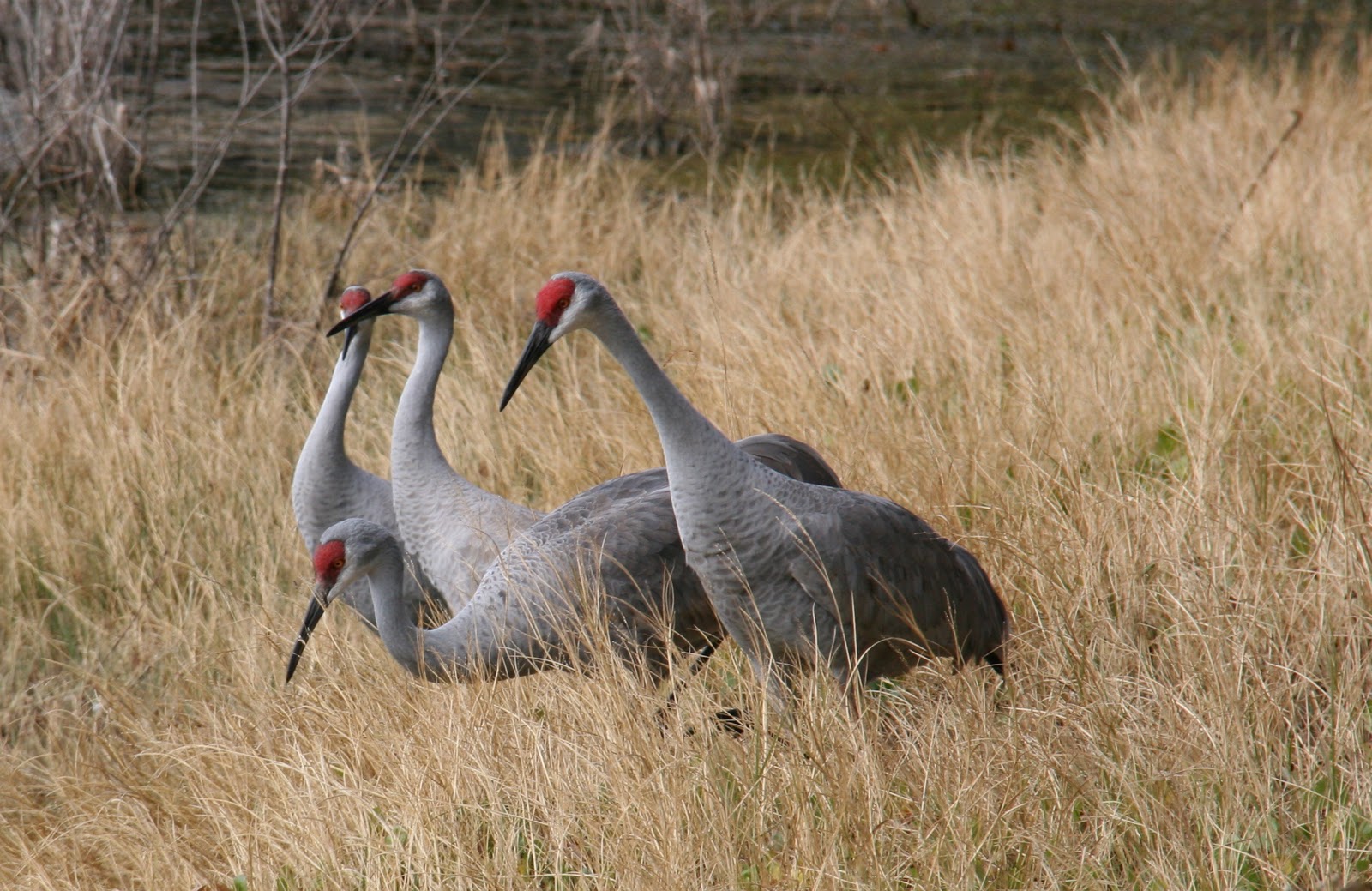
Sandhill cranes in Citrus County, Florida
As I have advanced in my photography skills, I have also realized that I have not only learned more about how to use my camera and lenses, but in the process gained valuable life lessons.  I now know there is also a lot more to learn. Some examples and illustrations from my weekend in Citrus County, Florida follow.
Make sure you have all your equipment before you leave the house.  I rushed out the door to photograph the sandhill cranes when I heard them flying over the house.  Unfortunately, I left my flash card indoors and found out when I raised the camera to shoot and it wouldn’t cooperate.  Missed opportunity.
Sometimes when you mess up you get a second chance.  The cranes came back again the next day.
Wait.  Patience pays off.  I sat on the dock for 20 minutes without taking any photographs, just watching the moves of the sandhill cranes.  Sure enough, they came closer and closer until they were only 6-8 feet away. 
Clean up your files so you have room for new ones. There I was with the sandhill cranes almost close enough to touch them.  I had waited and I had the best opportunity ever to shoot great close-ups of them.  This time I had the flash card but it was full.  Instead of getting the perfect shot, I spent time deleting photos from the flash card to make room for a few more photographs.  
Sometimes a new angle makes all the difference in the outcome.  Photos of the same bird, same location, different angle do not alike. 
Get out from behind the camera and take in the whole view – you might otherwise miss something.  I was so busy photographing the sandhill cranes that I didn’t realize that other birds were all around me.
Don’t be in such a hurry that you miss what you were looking for.  Rushing to the spot where I thought the cranes would be, I nearly walked right into them as they strutted down a driveway.
Sometimes a view from a distance is worth more than being up close.  It was such a thrill to watch the fly-over of the whooping cranes behind their ultralight “mother”.  Up close the view might not have been as dramatic.
Share your joy when you see something special.  A woman on her motorized wheelchair, with her little dog riding where her amputated legs should have been resting, stopped to admire the sandhill cranes.  We spoke about them and their amazing beauty and grace.  I walked on down the trail and she and her dog stayed a bit to watch the birds, then continued their journey.
Your mind is the best photographer.  It was impossible to capture the beauty of the sunset.  These photographs are nothing like the real thing that is still etched in my mind.
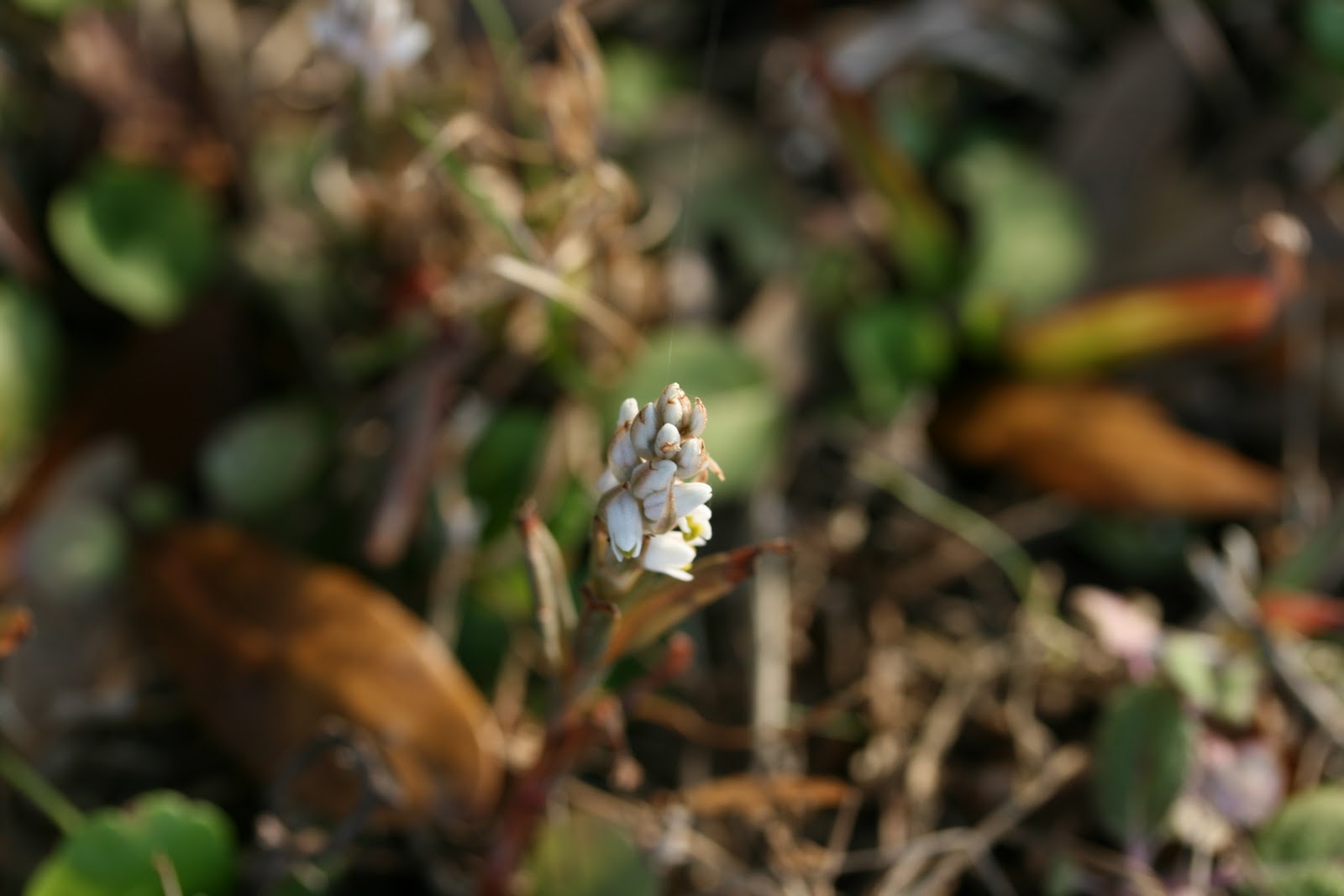
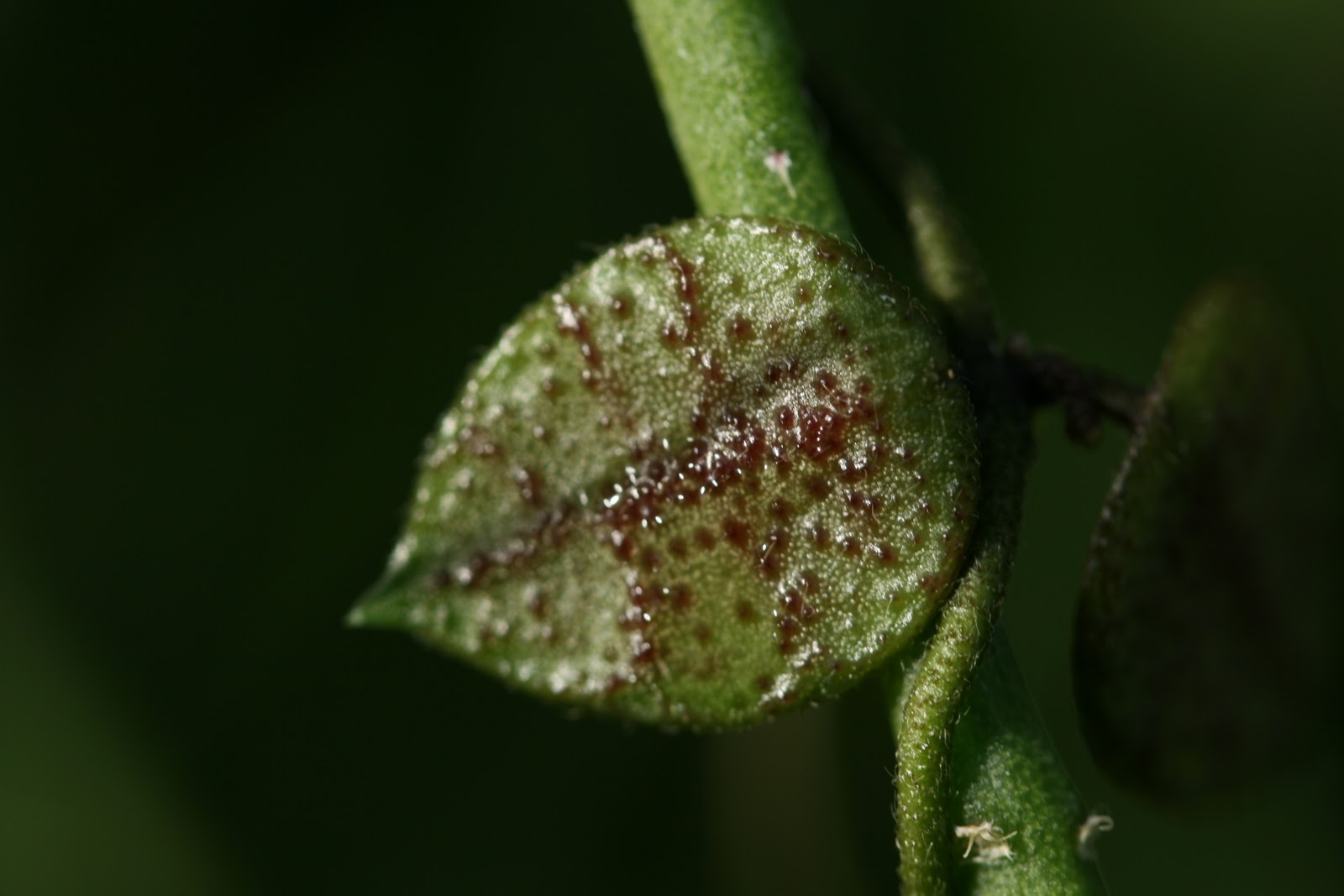
A close look sometimes gives you a different perspective.  Who knew a weed could be so beautiful or interesting?
Nature and sunlight pair to create exceptional beauty.  These cypress knees in the morning light were hard to resist and moss in the trees looked pretty in the late afternoon sun.
Opportunities present themselves in the most unusual locations.  The Citrus County dump was a good place to see lots of swarming birds.
Be careful where you step.  Wild orchids grew in the grass and I almost crushed them.

Get out and Walk.  You are bound to see something interesting.  The Withlacoochee trail in Citrus County, Florida offers endless photo opportunities.


Monday, January 17, 2011

90 Minutes in the Walmart Parking Lot


“Not much happens early in the morning in Citrus County,” said my brother as we drove into the Walmart parking lot  in Homosassa, Florida about 8:00 a.m.  I had read in the previous day’s newspaper that the five young whooping cranes and their ultralight plane "parents" were to fly over en route from Wisconsin (they left there in October) to their winter home in Chassahowitzka National Wildlife Refuge, only a few miles away.  They were to be led by two ultralight airplanes.  This was an adventure, and an opportunity to spend precious bonding time with my brother.
Wood Stork
Bird watching while waiting
As we were standing in the parking lot, observing the other bird enthusiasts, my brother pointed to a wood stork flying overhead.  I had an up-close encounter with one last year; they are mighty ugly but they look impressive flying in the distance – certainly more so than the constant supply of seagulls. 


What is this?
A man pulled up next to us, seemingly curious about the gathering crowd with their cameras and binoculars.  A police siren sounded in the distance and my brother said, jokingly, “It's the Whooping Crane parade!”  "Really?" said the man, sounding surprised and a little bit excited. He asked more questions and my brother made a joke about wearing his hat to protect his crainium when the birds flew over.  The man walked away, clearly not as amused by us as we were by ourselves.

In the starting gate

Homing pigeons heading home
No ordinary pigeons  
Two men in a station wagon unloaded small boxes in the corner of the parking lot. We saw a whooosh of pigeons emerge,  flying in formation overhead.  “Homing pigeons,” said my brother.  We talked to the men, who were very nice and enthusiastic about their hobby.  They raise and race pigeons; these birds were new and only flying 20 miles home that day.  We were invited to look at those still in their carrying crate.  Suddenly they released them; the birds were very glad to get out of that box and began circling the parking lot.  


One suggestion:  If you ever meet someone who raises pigeons, do not make the mistake of asking “So how are these pigeons different from the ones you find in the park?”  That is much like asking a thoroughbred breeder how his horse differs from the nag pulling a plow in the field.  Oops. 


Maiden flight for this group of homing pigeons
Craning for the Cranes
Soon we began to hear whispers through the small crowd that the lead plane was coming into sight.  We could hear a humming sound and by following the pointing hands, discovered the orange top  of the “mother” plane leading the five first-time flyers.  We quickly noticed there were only four birds behind the plane and were concerned that something had gone awry for one of them.  Our fears were squelched when we saw a tiny black dot behind the second aircraft.  It was the little slacker, bringing up the rear. 
It was quite a sight to behold.  Partly because we spend an hour standing on the Walmart asphalt on a chilly winter morning, but mostly because it was good to be among those welcoming the cranes to their new home.
Courtesy of the International Crane Foundation
Background on the Cranes
The 1996 movie Fly Away Home is the story of a young girl who raises geese and becomes their Mama, teaching them to follow an ultralight plane and migrating south for the winter.  Similar techniques were employed to teach these crane chicks to migrate.
Suit worn by humans working with crane chicks

Steven F. Udvar-Hazy Center, Chantilly, Virginia
Whooping crane chicks raised to be introduced into the wild - and this migratory program - are only exposed to humans  wearing wearing special white suits, disguising their human features to look more crane-like.  Their human friends also wear a puppet on one hand that looks like the head of an adult whooping crane.  The whooping cranes we saw are the latest addition to the eastern flock that was established in 1999.
The International Whooping Crane Recovery Team is a team of American and Canadian ornithologists and biologists that recommend policy to the US Fish and Wildlife Service and the Canadian Wildlife service for the protection of the species, primarily those that migrate from Canada to Texas.  They established the Whooping Crane Eastern Partnership (WCEP)  and the additional migratory flock that winters in Florida and spends it summers in central Wisconsin.  Operation Migration’s method of ultralight-led migration was sanctioned by the Whooping Crane Recovery Team and Operation Migration planned and led this mission.  Many of the chicks they work with are raised at the Patuxent Wildlife Research Center in Laurel, MD. 
See the Operation Migration website for a journal of the work with the chicks, photographs of the volunteers dressed in white suits with crane puppet heads training the chicks, and their initial training flights with the ultralights.  One of the ultralights, along with the special suit, is on display at the Steven F. Udvar-Hazy Center in Chantilly, Virginia (part of the Smithsonian's Air and Space Museum).
Courtesy International Crane Foundation
Whooping Crane Facts
The whooping crane has a 7-8 foot wing span and stands about 5 feet tall.  Their lifespan in the wild is 22-24 years.


In 1941, the wild population was down to 21 birds and in 1967 it was declared an endangered species. There are only about 650 of them in the world. 

As part of their courtship ritual, they whoop and dance.  They mate for life.

The only naturally occurring whooping cranes spend their summers in Wood Buffalo National Park in Canada and winters in the Aransas National Wildlife Refuge in Texas.  In 2006 there were 200 birds in the flock.  They migrate in the spring and fall along a narrow corridor between the two locations.

With the introduction of the Eastern flock, that the new Florida residents belong to, and the intervention of the many cooperating organizations that protect the birds, the population has increased to more than 400 wild birds and about 150 captive birds.   


Sunday, January 9, 2011

The Botanic Garden on a Cold Afternoon


On a cold and windy day, a visit to the US Botanic Garden can be a wonderful escape.  The Christmas displays have been removed and the tourists are gone; it was a serene place to spend an hour or so with a good friend.
There are always beautiful things in bloom and the changes in temperature and humidity, as you move through the desert and among the tropical displays, is really exhilarating and makes you pine a bit for spring - or a good trip to a warm place.   I was misted and dripped on and it did not improve my already windblown hairdo - and I did not mind one bit. 
The orchids are especially beautiful and colorful.  
The bromeliads were also varied and vibrant.  
The leaves were sometimes more beautiful than the blooms.


It was a lovely escape from the cold outdoors and reminded me that getting out is always worth the effort.  Washington offers many free opportunities for a mini-getaway on a cold Sunday, no resumes required.    

Puzzling Lessons


Our Christmas day puzzle
This Christmas was delightfully homey with a smattering of entertaining and a fair amount of cooking and overindulgence.  My favorite parts involved family and friends.  
Merry pomegranates
Christmas Day, after all the presents were opened and we had been in our pj’s quite long enough, the fire had died out, and the den was trashed with wrappings and gifts, we decided to move to another room and begin a jigsaw puzzle.  
Happy dog
What were we thinking?  Three ADD people who get great satisfaction from tasks requiring extreme concentration and who are all very competitive.  We accomplished nothing else the rest of the day.

We worked into the night and by golly we finished that thing by the next morning – all 1,000 pieces.
Expert at work
“I hate puzzles” was said more than once during the marathon session.

I started buying puzzles for our family because it was something we could do together that didn't require a lot of equipment...and it encouraged verbal communication.
The finished puzzle
It occurred to me that puzzles offer a fair number of life lessons that may be valuable to others.  This is what I came up with.  Can you think of more?

Lessons from the Jigsaw Puzzle
One more piece!

  • If you can’t find the right fit, walk away and come back with new perspective.  You are sure to have success.
  • Dividing up the work can make a task go faster.
  • Lots of pieces have similar qualities but aren’t right for the job.
  • Everyone wants to get in on the project when you are about to finish the task.
  • Knowing that there is an end to the task makes it easier to put up with the hard parts.
  • When you are midway through and it gets dull, you start losing workers and enthusiasm.
  • Setting boundaries gives you an important perspective (we work the edge pieces first).
  • Camaraderie and supporting one another keep your spirits up (we high-fived and said “way-to-go” to one another often). 
  • When males get bored or distracted they tell farting jokes.
  • It is good for the soul to laugh so hard you think you might cry.
  • Cookies taste better while puzzling and the team sticks around longer.
  • People who tend to be ADD are often good at puzzles.
  • When you have a particularly difficult piece to place, it makes sense to call in the expert and let him advise (one of us is particularly good at the most difficult to match pieces).
  • When you try to find the final piece and it’s missing, the whole team is disappointed but glad to finish the task.

Thursday, January 6, 2011

Wisdom


My dear friend gave me a lovely, thoughtful gift this Christmas – Wisdom.  

Wisdom came in the form of a polished stone with “Wisdom” engraved across the face.  It’s one of those things you might see in a bowl in the lobby of a yoga studio or a place of meditation.  It’s sort of new-age.  But wisdom isn’t a new idea.

It’s timeless.

We’ve both been absent full time jobs for going on two years now.  We’re smart, driven, good at what we do.  Those three things haven't gotten us too far in the employment department, but we have gained a lot more wisdom in the effort to find work.

She said she thought we should both acknowledge how much wisdom we have acquired, but that we keep getting wiser.  We can keep absorbing it and never be satiated.  If we get wise enough, maybe it will radiate to an employer and they will realize they should hire us.  That last thought was mine.

I gave up sugar and sweets on December 31st at about 11:30 p.m.  I should have started earlier.  Unlike holiday sweets or good wine, we don't overdo it on wisdom over the holidays.  We really can’t get too much and it’s most assuredly better for us and will not make us fat.  But you can't order it in a restaurant ; you must live it.

As the new year begins, I have studied my stone and thought about how I have acquired wisdom.

Trying new things
Observing animals and nature
Watching and listening to my parents, friends and children
Taking risks
Getting hurt
Making mistakes
Loving
Studying
Parenting
Doing
Trying
Persevering
Failing
Winning
Achieving
Giving
Mourning
Praising
Acknowledging

This little stone is quite a symbol.  It’s my good luck charm for the year to come and my challenge to keep on learning.  

Happy New Year! 

Some Cheer and the Art of Giving

Nine years ago tonight, my Dad passed away.  I talked to my brother, sister and Mother today, sharing memories of his life and of those final days.  My friend Debbie thoughtfully called and recalled that it was the anniversary.

Dad had a stroke.  My brother, sister, Mother and I took turns staying with him to ensure he was never alone.  It was hard but important and very special to have the time to say good-bye.  Including the nights in the hospital, many when I was awake with him much of the night, it was probably the most consecutive hours I had ever spent alone with him.  

During the last days I talked to him about everything.  He couldn’t respond, except for a tear running down his cheek or a faint hand squeeze or a tiny smile when he opened his eyes.  But he knew I was there and that is all that mattered.  I told him about his condition, how we were carrying out his wishes that they not prolong his life unnaturally.  And that it was hard for us to accept that because we didn’t want to lose him.  I sang to him and he probably got really tired of that and wished he could turn the channel.  I pushed away the phlebotomist; why stick needles in a dying man (and incur unnecessary charges to Medicare)?  Dad smiled faintly as he watched the interaction.

Knowing the end was near, and that I had young children and responsibilities I needed to return to, I said my good-byes to Dad at the end of the week.  By then we had begun to make plans for a memorial service and I knew I would be returning again soon but would not see him again on earth.  He passed away while I was flying home.

I arrived home to a package addressed in my Dad’s handwriting.  He had been to the after-Christmas sales the day before his stroke and inside were three ornaments made by a company Dad knew I liked.  There was also a brief note that ended with:

“I thought these would bring you some cheer.  Devotedly, Dad”

He posted the package the day before he had his stroke.  I’ve always wondered if he didn’t have a little premonition that I might need some cheering up with their arrival.

Each year when I unwrap the three ornaments that look a lot like the three Muskateers, I think about Dad and how much he loved Christmas and his family and grandchildren.  (I am also reminded, by the chew marks on one of them, that I am glad my dog is no longer a puppy.)

The art of giving is really in knowing when someone needs to receive.  Dad had a knack for that.